Efficiency is King
Unlike product or services websites web applications are used repetitively, often many times a day by the same person completing the same task again and again. Because of this core difference when designing for web applications we need to focus on efficiency.
To-Do lists are a very popular app category, let’s create an example:
Imagine yourself in your app dashboard as in the example below. To create a to-do you would click the create button, taking you to a view or screen solely for to-do creation. You fill out the to-do details and click create. You are then taken back to your list of to-do’s.
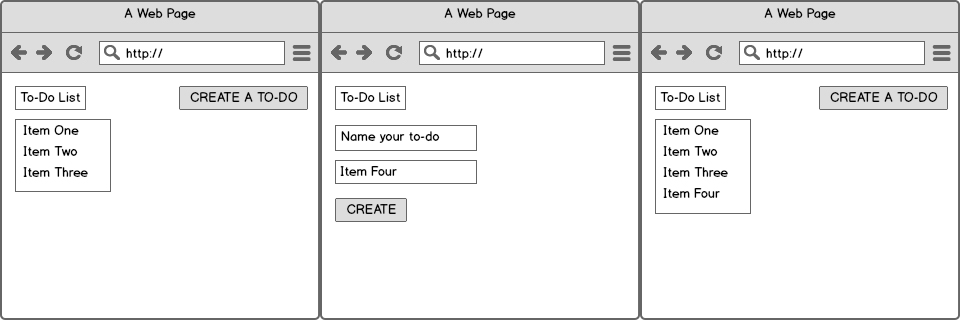
Even for a simple task such as this we require two page refreshes and two views or screens. Depending on the users internet connection speed this could take a few seconds each time. Imagine this scaled over a day or a week, not very efficient or delightful for the user.
Instead an efficient design would be to add the to-do inline like the example below in the app Trello. An animation or alert can communicate to the user that the item has been added to the list and saved. The animation should never slow down the process though. This can be achieved technically using ajax to update the database with the users information without refreshing the page.
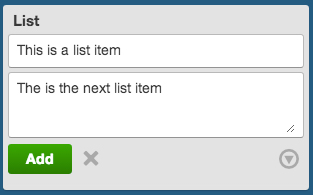
This is designing for efficiency, taking the most important and commonly used tasks and iterating until they become effortless for the user.
Know Your User
In order to create efficient interfaces for your app you must understand your user. A common mistake is to become too wrapped up in the apps complexity.
As Steve Krug said,:
“Developers like complexity; they enjoy discovering how something works.”
You user is not you or your client or your web design team if you are the client.
There are many well known techniques for identifying users:
Stakeholder Interviews: simply asking questions about the users knowledge of computers and which existing software they know and use. This is key, designing using known patterns can greatly improve the learnability and memorability of your app. Meaning how fast people learn and remember how to navigate and performs tasks in the app.
Shadowing or Observation: This can provide more information on how the user performs tasks and common errors or mistakes they make.
User Personas: If you don’t have access to your user group or are unaware of who they are yet you can create user personas. User personas represent real users, their motivations and goals. See the example below.
Consistency
Another key factor when designing web applications for efficiency is consistency. The interface should be consistent throughout the web application, this includes navigation, section headers, colours (especially for calls to action) terminology; people underestimate the importance of clear and simple text! This will again improve how fast people learn and remember their way around the app.
Familiarity
Using appropriate metaphors from the users past software experience can greatly increase the efficiency of your web application. Folders are a great example here, all computer users know and use folders to organise and find information. Using relevant design patterns early in your application design process is key to getting this right from the get go.
Less is Faster
Simplicity is important in creating efficient web application, if the user is overloaded with information they won’t find what they need to complete their tasks. In general an app that has fewer features can often prove to be more successful than a bloated and poorly optimised app. Boil down your features to the necessary few and do the same when designing your interfaces.
via:http://wholedesignstudios.com/web-applications-designing-for-efficiency/

No comments:
Post a Comment